
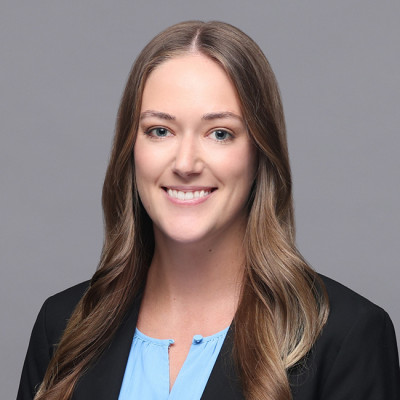
Photo of Emily Manning

Emily Manning

In accordance with 42 C.F.R. § 424.515, all healthcare providers participating in Medicare are required to periodically revalidate their enrollment records with the Centers for Medicare & Medicaid Services (CMS) in order to maintain Medicare billing privileges. This routine process requires providers to confirm and, if necessary, update their enrollment information.

Revalidation generally occurs every

Medical spas continue to expand beyond traditional aesthetic services, and peptides have quickly become one of the more heavily marketed offerings in this space. While these products are often positioned as part of a broader “wellness” model, the legal framework that governs them is far less flexible.

At the federal level, the key issue is

A recent report issued by The NYU Stern Center for Business and Human Rights entitled “Private Equity and Healthcare: Balancing Profit with Wellness” examined the expanding role of private equity in the healthcare sector, concluding that “Private Equity’s combination of legal immunity, public anonymity, and financialized ownership creates a culture that often prioritizes profits over

On March 20, the Federal Trade Commission (FTC) issued a memorandum announcing the formation of a Healthcare Task Force dedicated to addressing unlawful business practices within the healthcare sector. The memorandum emphasizes that industry consolidation and anticompetitive conduct have contributed to “higher prices, decreased quality, less access and transparency, and stifled innovation.” According to the FTC

The New York “Shield Law” refers to several statutes intended to protect patients and providers seeking or offering services concerning gender-affirming care or abortion. These statutes were enacted in response to certain other states increasingly criminalizing these types of healthcare services. The Shield Law prohibits state cooperation with hostile actions, prevents the forced production of

A New York physician was recently sentenced in federal court for receiving kickbacks in exchange for ordering medically unnecessary brain scans. Vishnudat Seodat of Mattituck had practiced for 36 years and operated three “New York Health” offices on Long Island. He announced his retirement in a letter to patients last month.

From 2013 to 2019

The New York Attorney General’s Office imposition of a $250,000 penalty on MVP Health Care for maintaining an inaccurate mental health provider directory riddled with “ghost” providers was recently discussed here. The problem, however, extends beyond New York. The U.S. Department of Health and Human Services’ Office of Inspector General (OIG) recently issued a

As of September 30, several temporary Medicare telehealth flexibilities that were put in place during the COVID-19 pandemic officially came to an end. One of the most significant changes involves the site requirement for telehealth services. Medicare beneficiaries can now only receive telehealth services other than behavioral or mental health services from specific originating sites

The New York Attorney General’s office recently announced an agreement with MVP Health Care under which the insurer will pay $250,000 in penalties, fees, and costs to the state for maintaining an inaccurate mental health provider directory. The settlement is the first arising out of an investigation of so-called “ghost networks” by Attorney General Letitia

The U.S. Department of Justice recently issued a press release concerning a Statement of Interest that shields small businesses from being forced to provide medical coverage for gender dysphoria.

In Bernier v. Turbocam et al., the Plaintiff, who identifies as a woman and has been diagnosed with gender dysphoria, claims denial of “medically necessary”